Get Healthy!
- Posted January 26, 2026
Trees — But Not Grass Or Other Greenery — Good For Urban Dwellers' Heart Health
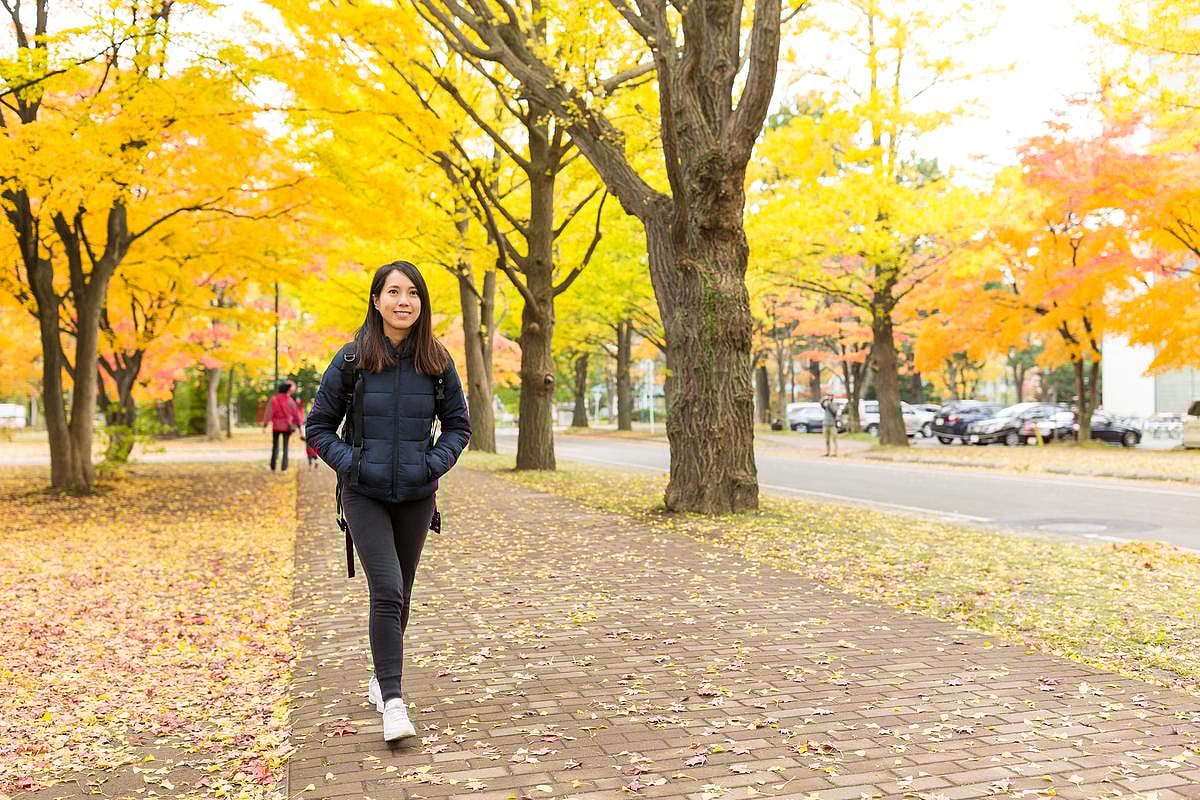
Trees — but not grass or other greenery — are associated with a lower risk of heart disease in cities, a new study says.
People living in urban areas with more trees have a 4% lower risk of heart disease, researchers will report in the February issue of the journal Environmental Epidemiology.
On the other hand, living near more grass, bushes or shrubs carried a higher risk of heart disease, researchers found.
“Our findings suggest public health interventions should prioritize the preservation and planting of tree canopies in neighborhoods,” said lead researcher Peter James, an associate professor of public health at the University of California-Davis.
“Urban forestry initiatives and policies that protect mature trees are likely to yield greater cardiovascular health benefits compared to investments in grass planting,” he said in a news release.
For the new study, researchers analyzed more than 350 million street view images in U.S. urban areas to estimate the amount of trees, grass and greenery.
Previous research using satellite images has linked urban green spaces to better public health, researchers said in background notes.
However, those images don’t distinguish between different types of greenery, lumping it all together as green space, researchers said.
“Satellite imagery has allowed for important new understandings about how the landscape — built and natural — can influence human health,” James said. “But because the view is from far, far above, and lumps all types of vegetation into one category, it can mask differences that may be significant.”
The research team used street view images drawn from sources like Google Street View to evaluate urban greenery. An artificial intelligence (AI) program analyzed the images to estimate what a pedestrian would see, creating a street-level estimate of specific types of greenery like trees, grass or bushes.
The team then compared those estimates to findings from nearly 89,000 women participating in a Nurse’s Health Study, using their home address to determine the type and percentage of greenery within 500 meters of where they live.
Higher percentages of visible trees were associated with a 4% lower incidence of heart disease.
On the other hand, higher levels of visible grass were linked to a 6% increase in heart disease, and other types of greenery like bushes and shrubs with a 3% increase.
Researchers were surprised by the potentially harmful associations with grass and bushes.
They said there are multiple potential explanations for this, including increased use of pesticides, air-quality impacts from mowing, lower cooling capacity compared to trees, and less ability to filter noise and air pollution.
More research is needed to suss out exactly which natural features can best improve the health of urban dwellers, the team concluded.
“The research opens a promising new avenue: improving cardiovascular health through community-level environmental changes rather than relying solely on individual lifestyle choices,” said researcher Eric Rimm, a professor of medicine at Harvard Medical School and of epidemiology and nutrition at the Harvard T.H. Chan School of Public Health.
“Heart disease has such an enormous impact on the Western world that even moving the needle slightly towards earlier prevention can make a meaningful difference,” he said in a news release.
More information
Harvard Medical School has more on how trees and green spaces enhance health.
SOURCE: University of California-Davis, news release, Jan. 21, 2026


